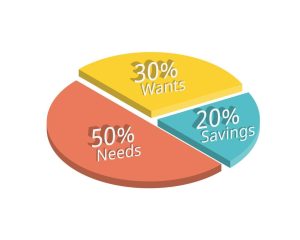

Trying to plan your finances when your paycheck bounces between $1,500 and $6,000 feels like trying to nail jelly to a wall. You need a flexible system built for your freelance reality, not a rigid spreadsheet designed for salaried employees.
When you work for yourself, traditional financial advice often falls flat. The standard 50/30/20 budgeting rule assumes you know exactly what is hitting your checking account on the 1st and 15th of every month. For freelancers, gig workers, and self-employed professionals, that kind of predictability is a luxury.
Mastering your fluctuating income requires a complete mindset shift. Instead of forecasting exactly what you will make, you must plan exactly how you will spend whatever actually clears the bank. Here is exactly how to regain control over your money, eliminate cash-flow anxiety, and build a fail-proof financial system.
Calculate Your “Bare Bones” Baseline First
Before you can even think about allocating variable income, you must know your absolute survival number. This is not the budget that includes your gym membership, Friday night takeout, or software subscriptions you rarely use.
Your bare-bones baseline is the exact amount of money you need to keep a roof over your head, the lights on, and basic food in your fridge. Think of this as your financial life raft. If a client delays a payment by 45 days, this is the exact number you need to survive without going into toxic credit card debt.
Calculate these essential monthly expenses today:
-
Housing (Rent or Mortgage payments)
-
Basic Utilities (Electricity, Water, and the Internet required for your business)
-
Groceries (Strictly essentials, zero dining out)
-
Minimum Debt Payments (Auto loans, credit card minimums to avoid default)
-
Essential Insurances (Health, auto, and renters/homeowners)
Add these figures up. This total is your monthly baseline goal. When a freelance invoice is paid, this is the very first bucket that gets filled before anything else.
Separate Your Business and Personal Finances
One of the biggest mistakes variable-income earners make is operating out of a single checking account. Commingling your funds makes it impossible to track true business profitability or manage personal spending.
Open a dedicated business checking account today. Every single client payment, affiliate check, or gig payout must go into this business account first. You then pay yourself a clear, documented transfer into your personal account.
This separation not only makes budgeting easier but is absolutely critical for legal liability and tax deductions. If you are ever audited, having a clean boundary between business revenue and personal groceries will save you thousands in accounting fees.
The “Buffer Account” Methodology
This is the secret weapon for variable income earners. A buffer account acts as a financial shock absorber between your unpredictable client payments and your very predictable monthly living expenses.
Instead of depositing client checks directly into your main checking account and spending from there, you route all incoming revenue into a separate holding account. You then pay yourself a fixed, predictable “salary” from that holding account into your personal checking account on a set date each month.
Official guidance from financial bureaus emphasizes that building a liquid cash buffer is the foundational step for long-term financial resilience. During your high-income months, the excess cash stays in this buffer account. During your dry spells, you draw from that accumulated reserve to pay your baseline salary.
Building this buffer takes time, but it completely removes the panic of a slow month. Here at budgettipshub.com, we consider a fully funded buffer account—holding at least one to two months of your baseline expenses—to be the ultimate milestone for freelance financial stability.
Case Study: Sarah’s Variable Income Budget
Let’s look at how this works in a practical scenario. Sarah is a freelance graphic designer. Her income wildly fluctuates based on client retainers and one-off branding projects.
Her calculated bare-bones baseline is $2,500. Let’s see how she handles a “Feast” month versus a “Famine” month using a prioritized allocation strategy.
| Budget Category | “Famine” Month ($2,000 Income) | “Feast” Month ($5,500 Income) | Strategic Purpose |
| Estimated Taxes (25%) | $500 (Set aside immediately) | $1,375 (Set aside immediately) | Taxes are non-negotiable and scale perfectly with income. |
| Baseline Living Expenses | $1,500 (Pulls $1,000 from buffer) | $2,500 (Fully funded by income) | The buffer account covers the shortfall in a bad month. |
| Buffer Replenishment | $0 | $1,000 | Rebuilding the safety net while cash flow is strong. |
| Extra Debt Payoff | $0 | $300 | Attacking debt principal only when essentials are covered. |
| Lifestyle & Discretionary | $0 | $325 | Dining out and entertainment get funded absolutely last. |
Notice that during her $2,000 month, Sarah still sets aside tax money first. She then pulls $1,000 from her previously established buffer account to cover her $2,500 living baseline. During her $5,500 month, she heavily funds that buffer to prepare for the next inevitable slow period.
Automate Your Self-Employment Taxes
Self-employment taxes will destroy a freelancer who hasn’t proactively planned for them. Because no employer is withholding income tax or Social Security from your checks, you are entirely responsible for managing this cash flow.
Federal tax authorities strictly require independent contractors, freelancers, and small business owners to pay quarterly estimated taxes. If you wait until April to figure out what you owe, you will face massive underpayment penalties and a tax bill you cannot afford.
Never use the tax agency’s money to fund your lifestyle. Treat the government as your most aggressive business partner who automatically owns a quarter of everything you make.
Open a high-yield savings account specifically labeled for taxes. The exact minute an invoice is paid, transfer 25% to 30% of that gross amount directly into the tax account. If you leave tax money in your primary checking account, you will accidentally spend it on daily expenses.
Sequence Your Spending with a Prioritized List
When you have a great month, it is highly tempting to immediately upgrade your lifestyle, buy new equipment, or book a vacation. To prevent lifestyle creep, you need a strict spending sequence.
Write down exactly where your money goes in order of absolute importance. When a check clears, you fund item number one. If there is money left over, you move down to item number two.
A healthy freelance priority sequence looks like this:
-
Taxes: Move your 25% to 30% into a separate, untouched tax savings account.
-
Baseline Living: Fund your bare-bones housing, food, and utility expenses for the current month.
-
Buffer Account: Save aggressively until you have at least one full month of baseline expenses in cash.
-
Debt Eradication: Attack high-interest credit cards or fund your retirement accounts (like a Solo 401k or SEP IRA).
-
Lifestyle: Finally, allocate any leftover funds for dining out, travel, or business upgrades.
If you only make enough to cover steps one and two, you stop spending immediately. The priority list makes the difficult emotional decisions for you before the money even hits your account, keeping you disciplined.
Handling Late Invoices Without Panicking
Variable income is not just about earning different amounts; it is also about getting paid at unpredictable times. Net-30 payment terms can easily stretch to Net-60 when a client’s accounting department drags their feet.
Do not let their inefficiency cause you to miss your own rent payment. You must build a specific routine for following up on late payments politely but firmly. Set calendar reminders to send automated follow-up emails three days before an invoice is due, on the due date, and every week it is late.
While you are chasing down that money, your buffer account is what keeps the lights on. This is exactly why we emphasize prioritizing that liquid cash reserve at budgettipshub.com. It buys you the mental peace to negotiate with clients professionally rather than out of desperation.
Plan for Your “Dry Spells” Proactively
Every single freelance industry has seasonality. If you are a wedding photographer, winter might be completely dead. If you are a B2B consultant, the holidays and late summer often see a massive dip in client spending and invoice approvals.
Look at your historical invoicing data and identify your industry’s slow seasons. Once you know when the dip is coming, you can aggressively stack cash in your buffer account during your peak season. Anticipating a low-income month turns a financial emergency into a minor, expected inconvenience.
Grab a piece of paper right now and calculate your bare-bones baseline number. Open up your banking app, look at your current balance, and figure out exactly how many months you could survive if no new invoices were paid. By establishing that baseline today, separating your business accounts, setting up a dedicated tax fund, and building your buffer, you can finally run your freelance business instead of letting its unpredictable cash flow run you.
Disclaimer: The information provided in this article is for educational and informational purposes only. It does not constitute financial, tax, or legal advice. Please consult with a certified financial planner or tax professional regarding your specific business and personal financial situation.
Official Sources & References
-
IRS Estimated Taxes Guidance: https://www.irs.gov/businesses/small-businesses-self-employed/estimated-taxes
-
CFPB Emergency Fund Building Strategies: https://www.consumerfinance.gov/about-us/blog/how-build-emergency-savings-fund/