Swiping your debit card feels completely detached from reality until you check your balance on the 25th of the month and panic. If you are constantly blowing past your spending limits despite making a strict plan every single month, the problem is not your math; it is your methodology.
Welcome to a core debate in our Budgeting Basics series. You are likely torn between downloading yet another automated tracking app or retreating to the viral cash stuffing envelope system you keep seeing on social media. Both frameworks promise to cure chronic overspending, but they attack the problem from entirely different psychological angles.
To actually stop bleeding cash, you have to understand why you are overspending in the first place. Here is exactly how to determine which system will finally force you to keep your money in your pocket, build actual discipline, and hit your financial goals.
The Psychology of the “Pain of Paying”
Behavioral economists have studied spending habits for decades, and they all agree on one concept: the friction of a transaction directly impacts how much you spend. Credit cards, digital wallets, and saved payment information on websites intentionally remove all friction from buying.
When you double-click your phone to use Apple Pay, your brain registers a convenient task being completed. There is zero emotional weight attached to the transaction. You do not feel the money leaving your possession, making it incredibly easy to justify a $60 dinner on a random Tuesday.
Conversely, when you hand over physical paper bills, your brain registers a distinct loss. This is known as the “pain of paying.” To stop chronic overspending, you must actively reintroduce friction into your financial life so your brain has time to pause and reconsider the purchase.
The Cash Stuffing Envelope Method (The Friction Maker)
Cash stuffing is simply the modern rebrand of the Depression-era envelope system. You cash your paycheck and physically divide the paper money into designated, labeled envelopes. You might have separate envelopes for Groceries, Gas, Dining Out, and Entertainment.
This system relies on hard physical boundaries. When you go to the grocery store, you leave your debit card at home and only take the Groceries envelope. If the envelope is empty, you simply cannot buy the item.
There are no overdraft fees in an envelope. You cannot accidentally spend your rent money on a new pair of shoes because the rent money is sitting in a completely different physical pouch. The accountability is absolute, immediate, and impossible to ignore.
The major downside to cash stuffing is practicality. Carrying large amounts of physical cash introduces a theft or loss risk. Furthermore, managing online bills, Amazon purchases, and digital subscriptions becomes incredibly tedious when your money is sitting in a binder on your desk.
Digital Budgeting Apps (The Frictionless Tracker)
Digital budgeting apps like YNAB (You Need A Budget), EveryDollar, or Monarch Money digitize the envelope system. They use the zero-based budgeting framework, requiring you to allocate every single digital dollar to a specific category before the month even begins.
These apps securely sync with your bank accounts and automatically pull in your transactions. They provide beautiful charts, long-term net worth tracking, and seamless management of your online bill auto-pays. For highly disciplined people, these tools are the ultimate financial command centers.
However, for chronic overspenders, digital apps have a fatal flaw. It is dangerously easy to ignore a push notification. Swiping past a red alert on your screen that says “You have overspent your dining budget” does not physically stop the transaction at the cash register. The app often devolves into an expensive receipt tracker rather than a behavioral correction tool.
Case Study: David’s $600 Grocery Problem
Let’s look at how the right method changes behavior in the real world. David is a freelance consultant who budgeted $400 a month for groceries. Despite using a highly-rated budgeting app, he consistently spent over $600 a month at the supermarket.
The app would turn red by the third week of the month, but David would just swipe his debit card anyway, promising to “make it up next month.” The digital boundary was entirely theoretical.
David decided to switch his Groceries category to the physical cash stuffing method. On the 1st of the month, he withdrew exactly $400 and left his debit card in a drawer at home. By the third week, he looked in his envelope and realized he only had $35 left to survive the final ten days of the month.
The physical reality of those three ten-dollar bills forced an immediate behavioral change. Instead of buying premium steaks and name-brand snacks, David was forced to buy rice, beans, and frozen vegetables. For the first time in two years, he stayed perfectly under his $400 budget because the physical envelope made overspending literally impossible.
Head-to-Head: Which Method Fixes Your Leaks?
Understanding your own psychological weaknesses is the key to picking the winning strategy. Review this breakdown to see which system directly attacks your specific bad habits.
| Feature | Cash Stuffing Envelopes | Digital Budgeting Apps |
| Overspending Prevention | High: Physically impossible to spend what you do not have. | Low: Relies entirely on your willpower to stop swiping. |
| Best Used For | Groceries, dining out, entertainment, clothing, hobbies. | Rent, utilities, insurance, subscriptions, debt payoff. |
| Setup & Maintenance | Requires weekly ATM trips and physical math. | Automated syncing saves time after the initial setup. |
| Friction Level | Maximum friction. Forces you to feel every purchase. | Zero friction. Easy to spend money unconsciously. |
| Ideal User Personality | Emotional spenders, impulse buyers, visual learners. | Data nerds, disciplined savers, automated bill payers. |
The Hybrid Approach: The Ultimate Overspending Cure
You do not have to choose just one extreme. Here at budgettipshub.com, we have found that the most successful financial turnarounds happen when readers combine both strategies into a customized Hybrid Method.
You keep your fixed, predictable bills strictly digital. Your rent, car insurance, internet bill, and minimum debt payments should remain in your checking account and be set to auto-pay. You track these effortlessly using a free digital spreadsheet or a basic app.
You then use physical cash envelopes exclusively for your “danger zones.” Identify the two or three categories where you always blow your budget. For most people, this is dining out, spontaneous target runs, and weekend entertainment.
On payday, withdraw the cash strictly for those danger zones. Your bills are safely automated in the background, while your behavioral leaks are aggressively plugged by physical cash.
How to Implement the Hybrid Method Today
Stop researching and start executing. To put a hard stop to your overspending this week, follow this exact sequence today.
Step 1: Identify your biggest leak. Log into your bank account and find the one category that destroyed your budget last month. Let’s assume it is ordering takeout.
Step 2: Set a realistic limit. Decide exactly how much you are allowed to spend on takeout for the next 14 days. Let’s make it $100.
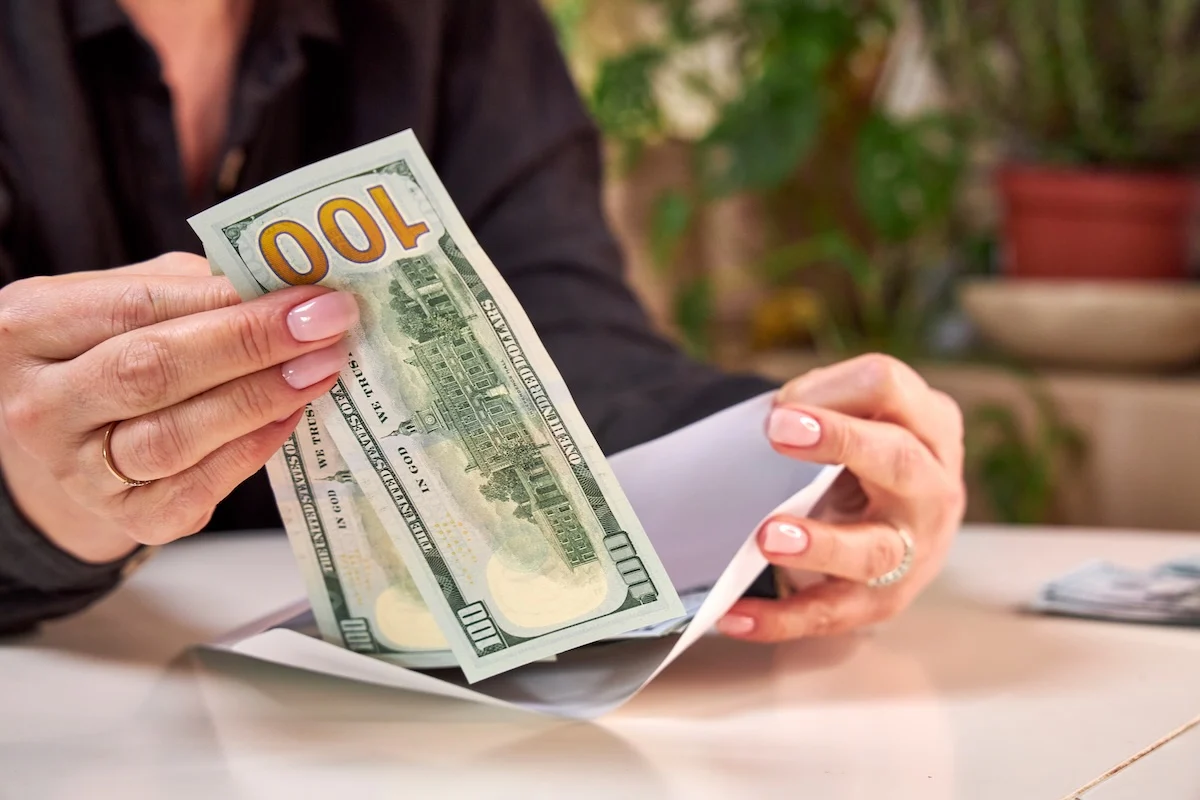
Step 3: Go to the ATM. Withdraw a crisp $100 bill and put it in a physical envelope labeled “Takeout.” Remove your saved credit card information from UberEats, DoorDash, and your web browser.
For the next two weeks, if you want a burger, you must physically walk into the restaurant and hand them the cash from that specific envelope. When the cash is gone, you are eating leftovers. Reintroducing this physical friction will completely rewire how your brain views your hard-earned money.
Disclaimer: The information provided in this article is for educational and informational purposes only. It does not constitute financial, tax, or legal advice. Please consult with a certified financial planner regarding your specific financial situation.
Official Sources & References
-
Federal Trade Commission (FTC) – Budgeting Basics & Worksheets: https://consumer.ftc.gov/articles/making-budget
-
Consumer Financial Protection Bureau (CFPB) – Tools for Tracking Your Spending: https://www.consumerfinance.gov/about-us/blog/track-your-spending-with-this-easy-tool/
-
FDIC – Money Smart Educational Resources: https://www.fdic.gov/resources/consumers/money-smart/